
Why cold water swimming is so good for you


It’s called ‘wild swimming” but if the thought of jumping into a cold lake fills you with dread, you’re not alone and you’re certainly not crazy.
You may already know someone who cold water swims, or maybe you’ve heard of the amazing Wim Hof. Cold water immersion has long been associated with both reverence and fear. Read on to discover the health benefits that accompany cold water swimming, which might just persuade you to take the plunge.
Get our lovely Healthy Bites newsletter each week!
Each week, you’ll get an amazing recipe, a useful health tip, and an ingredient to jazz up your shopping basket! We don’t share your details with anyone else.
What is cold water swimming?
In northern countries cold water swimming has long been a tradition and up until a few years ago cold water swimming was only performed by very few extreme athletes. Although there are no strict definitions of ‘cold water’, research suggests that observable body reactions occur when you are immersed in water temperatures below 15°C (59°F).
Cold water immersion has now gripped the UK. Not only does it encourage you to spend more time outdoors, which alone boasts its own overall health benefits, but regular swims in cold water have a profound impact on both physical and mental health.
Swimming provides an all-body workout. It is low impact but activates your cardiovascular system, strengthens muscles, increases flexibility, and may help support those with low mood. However, when you add the cold-water aspect into this already excellent physical activity, it takes the health benefits to deeper level.
What are the health benefits?
Well, there are many. Firstly, research suggests that cold water reduces muscle soreness, inflammation and swelling by restricting blood flow to the area of pain. Therefore, if you engage in sporting activities that often leave you feeling battered and bruised, cold water may help with this.
Studies also indicate that cold water immersion supports your cardiovascular system and may lower blood pressure. It is beneficial for our hormones, and it could help those with low mood; it may also boost your immune system. Some research indicates that it could even help with weight management as it may improve your calorie burning capacity, but more research needs to be done into this area.
Aside from the scientific benefits, this activity also brings a lot of joy and a sense of achievement, especially through the colder months!
Swimming with the seasons
Swimming in rivers, lakes, ponds or the sea all year round means that you meet the seasons up close and personal. Frosty cold mornings with bright blue skies, gradually merging into the low spring sunshine and bright green buds as nature comes back to life. This then rolls into rays of beautiful sunshine piercing though the water, the sun warms your skin and bones and lake angels become a regular feature as you gaze up into the sky and float around.
It is also a treat to swim with our friends in and around the water. Crayfish, trout, beautiful blue dragonflies skimming across the water, pond skaters and lots more!
Cold water swimming is a great way to meet new people and expand your social network. After a swim, you are encouraged to hang around for 10-15 minutes with a hot drink to ensure you’re warmed through before you drive home. Endorphins after a swim also give you a lovely feel-good boost.
Safety First
A cold plunge can be a real shock to the system. Cold water swimming has an impact on your heart rate, circulation and blood pressure; therefore, it is advisable to check with your doctor before you take your first swim. Once the doctor has given you the all-clear, there are some simple ways you can prepare your body.
The easiest way is to switch from warm to cold showers. Start with your shower warm, and then turn the temperature dial down to cold; begin with 15-30 seconds and build this up gradually over time, until you can withstand 3-4 minutes.
When you swim outdoors, it is important to buy the right kit, especially if you are starting out in the autumn or winter. Ensure that you buy a good quality wetsuit, goggles, gloves, socks and a brightly coloured swim hat so that your coach or fellow swimmers can see you. Some people also use a tow float when swimming for extra safety.
I also recommend getting a travel mug or flask to take a hot drink in, for after your swim. During the winter months, a welcome extra treat is to wrap your towels in a hot water bottle and then you can snuggle that under your jumper when you’ve got changed.
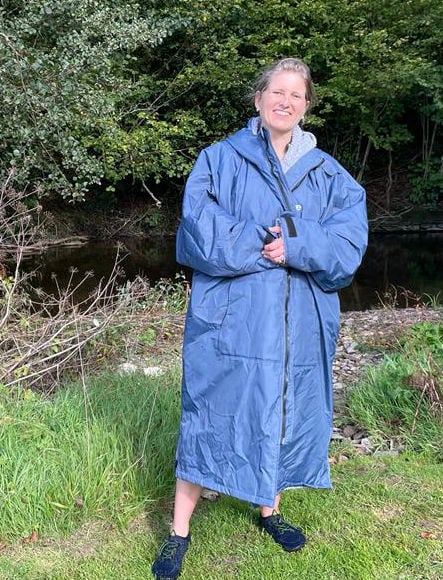
Some people buy a swimming coat, and I have an amazingly cozy dryrobe. They can be helpful but are not essential and can also be quite expensive; so probably not something to invest in until you get a real love for cold water swimming.
After your swim, it is important to warm up slowly, so bring warm clothes to put on after a swim including a hat, gloves, a thick winter coat and a hot beverage.
Risks to avoid
Make sure you join up with a friend or a group, as even though it is usually safe to swim in cold water, there are risks. So be careful!
Be aware of cold-water shock. This is an involuntary response by your body when it is unexpectedly or suddenly immersed in water where the temperature is less than 15°C. If this happens your body’s reaction will impact your capability to move and can also affect your breathing and heart rate. The sudden cooling of your skin can make you gasp involuntarily, which then increases your breathing rate. This is why it is really important to slowly immerse yourself into cold water and not start swimming until your body has adapted to the temperature.
Always remember that you do not need to spend a long time in cold water to get the health benefits. Keep the immersions brief, a few minutes is all you need to start with. You can build this up over time with the help of a swimming coach.
If you spend too long in cold water, it can lead to hypothermia. Some experts advise 1 minute per 1°C. So, if the water is 10°C then only stay immersed for 10 minutes maximum if you are wearing a swimming costume. If you are wearing a wetsuit this time is usually doubled, but always check with your coach.
If you swim in a river, canal or lake there is also a small risk of picking up Leptospirosis (Weil’s disease). This disease is spread in the urine of infected animals, most commonly mice, rats, dogs, cows and pigs. The symptoms associated with Weil’s disease include a headache, high temperature, nausea, sickness, diarrhoea, loss of appetite and aching joints and muscles. If you suspect that you have this, you should contact your GP as you may need antibiotics.
Go for it!
Cold water dips can benefit your health in many ways, they may help to boost your mood, support your immune system, soothe muscle soreness, raise your metabolism, and help you cool down after a workout.
There are now many organised groups of keen cold water swimmers, so check out if there is one in your local area, or look up ‘The Bluetits chill swimmers’ on Facebook to find fellow swimmers.
Top tips for an enjoyable cold water swim:
- Prepare your body by taking cold showers
- Get the right kit
- Swim in an organised group or with experienced swimmers
- Keep your dips short and warm up gradually
Happy cold water swimming!
Organic Tea

Turmeric Active
References
- Open water swimming as a treatment for major depressive disorder
- Cold Water Swimming—Benefits and Risks: A Narrative Review
- Cold adaptation, aging, and Korean women divers haenyeo
- What is the biochemical and physiological rationale for using cold-water immersion in sports recovery? A systematic review
- Cold water swimming and upper respiratory tract infections
- Could human cold adaptation decrease the risk of cardiovascular disease?
- Cold Water Swimming Beneficially Modulates Insulin Sensitivity in Middle-Aged Individuals
- Adapted cold shower as a potential treatment for depression




Responses