
Encopresis – My top tips to help stop your kids pooing in their pants

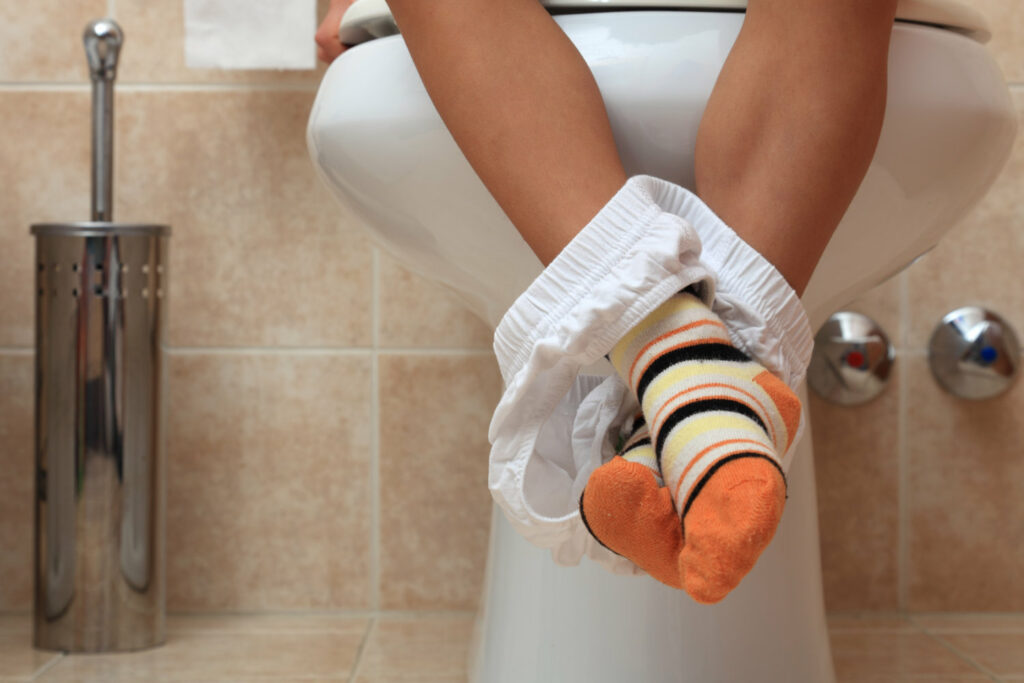
If you get a stinky whiff of poo from your child’s nether regions when you are giving them a hug, then they might well have done a poo in their pants. Most kids will leave some skid marks when they are learning to wipe their bottom, but if there is much more deposited in the pants or it runs down their legs on a regular basis then this could be something called encopresis.
Remember when your child comes back from nursery or school with yet another bag (or three!) of soiled clothes this is unlikely to be your child’s fault. But here are my top tips on how to help them join the clean pants club!
Get our lovely Healthy Bites newsletter each week!
Each week, you’ll get an amazing recipe, a useful health tip, and an ingredient to jazz up your shopping basket! We don’t share your details with anyone else.
What is Encopresis?
Encopresis is a condition where a child repeatedly soils their underwear with poo, often past the age when gastric control over bowel habits is typically expected. It affects about 1-2% of school-aged children and tends to be more common in boys than girls. There are several causes of encopresis, including chronic constipation, impacted stool, undigested food in the stool, slow peristalsis, poor core strength and psychological factors such as stress and anxiety. Food intolerances can play a role and so can intestinal parasites and amoebic infections as well a bacterial and yeast overgrowth.
Withholding poo can all start during the potty-training stage when some kids are reluctant to have a bowel movement anywhere other than their nappy. This can set up a vicious circle when they hold onto their poo because they don’t want to do it in the potty or loo, so their gut gets clogged up with poo and it can become too painful to pass.
This can mean they try to hold it in all day as they fear or strongly dislike the act of doing a poo and some only poo in a nappy at night when they are most relaxed. It’s usually during the times when they are distracted from focusing on holding it all in or gravity takes over that the accident tends to happen!
One of the key things to remember with encopresis is for the child to realise that it is not their fault, and these accidents rarely happen due to intended behaviour or attention seeking. Many people mistake this problem as being in the child’s control and it very rarely is!
Most of the time the child will feel a heaviness in their bowel all the time (akin to that feeling when you are about to give birth), but they simply can’t clear the backlog and the only stool coming through is overflow that has escaped round the side of the blockage. Imagine trying to hold your poo in all the time and how distracting that can be?
What causes Encopresis?
When a child gets constipated or doesn’t go to the loo every day, the poo gets backed up in the colon. This can lead to stretching and bulging of the colon as it is loaded with faecal matter.
Sometimes this can create a block of poo which can become very large and hard and may also cause pain and discomfort, and is often too difficult to pass bowel movements. This block can sometimes be the size of a large orange or even a small melon and this can cause the child to avoid using the bathroom, leading to further constipation and eventually encopresis. Sometimes there isn’t just one block of faecal matter but a generalised back-up of stool all the way up the colon. X-rays often reveal an alarming amount of poo lurking and stagnating in the gut.
Encopresis or soiling of the pants usually happens when the gut gets repeatedly impacted or backed up and there is a large volume of poo waiting in the gut, and not being efficiently eliminated when they do have a bowel movement.
Sometimes when the block is starting to clear you can see quite large volumes of dark and dry poo being expelled. The stool can be bulky and block the loo and can be described as looking like an elephant poo!
Sometimes the opposite can occur, and the stool can be as thin as a finger and form a snake-like pile in the bottom of the pan. If can also be flat like a ribbon when being expelled. These scenarios generally happen when the only way the poo can be expelled is by steering itself around any blockage of poo in the colon or if there is some inflammation in the gut.
Your child might also experience loose constipation which is where the poo seems quite soft (and often yellow/ochre in colour) which can also fill up the colon. This may be due to some kind of malabsorption due to coeliac disease (an autoimmune gut reaction to gluten), poor pancreatic enzyme output, a low-grade intestinal infection or gut inflammation and it is important to have these issues investigated further.
Constipation, poor motility and encopresis appear to be more common in hyper-flexible kids with hypermobile joints or Ehlers-Danlos Syndrome and other collagen-related issues. Kids with poor core strength can also have more sluggish motility. This is probably because a common co-morbidity of hypermobility is a slower migrating motor complex and/or peristalsis, which is the rhythm of electrical signals and muscle contractions that naturally push the faecal matter through the gut. If you are less efficient at making collagen, then you are more prone to the gut stretching out and retaining large volumes of faecal matter. Equally a weak core can also mean these gut muscles are not as efficient as they should be.
How to tackle Encopresis
The medical approach to encopresis is to prescribe laxatives and poo reward charts and hope that over time constipation and soiling will resolve themselves. However, lots of parents find that the soiling continues even when their child is taking the laxatives and is having a bowel movement most days and more help is needed.
Sometimes the parents assume that once the child is having a daily bowel habit they can stop giving the laxatives, but in many cases the child just goes backwards, and the soiling starts again.
This scenario of the soiling continuing beyond when would normally be expected, usually happens because the bowel remains stretched out from the past bowel impaction and this stretching is why full bowel control has not been achieved. If collagen disorder is present, or there are weak core muscles then the overstretched bowel and full bowel control can take longer to resolve.
Sometimes you may need to play the long-game when resolving encopresis entirely, depending on how long the soiling has been going on and how far the bowel has been extended, and the following diet changes and exercises below can really help over time so there is little to no regression in any progress made.
Diet and practical changes can play an important role in preventing and managing encopresis. To take a holistic approach to encopresis, you need to firstly make it easier to poo and make it a more positive experience. Next, it’s important to clear the impacted stool and resolve the constipation. And finally, the last step is to restore the shape and integrity of the bowel so that you and your child can be confident that they can achieve full control.
Keeping the stool soft and easy to pass with diet
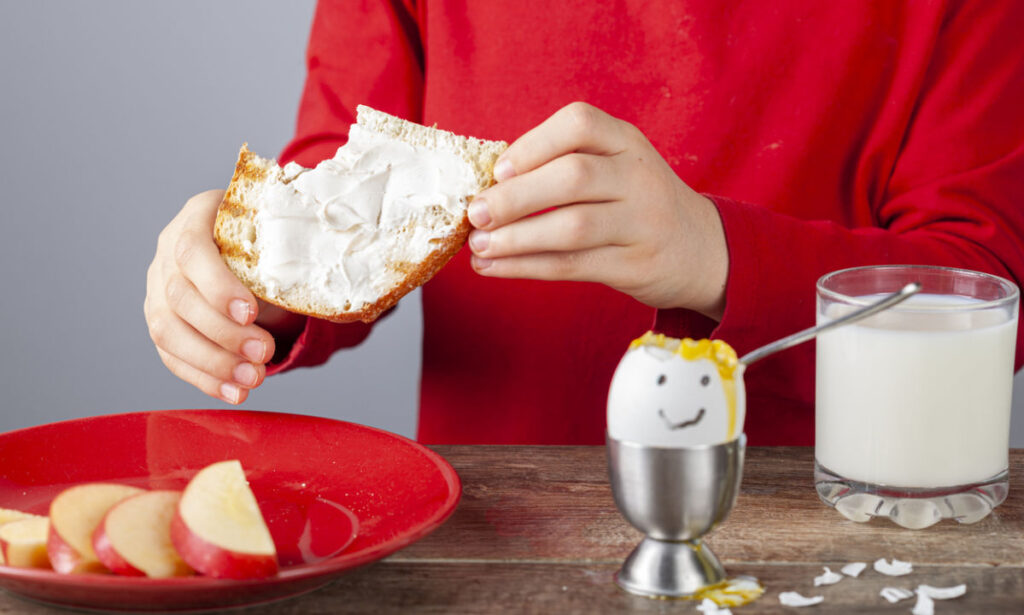
Firstly, build in fibrous foods and fluid that are going help lubricate the stool to pass through the colon more easily. This means eating more fruits and vegetables and drinking lots of water to help keep the stool easy to pass and prevent hard poo.
Sometimes this is easier said than done as an extremely constipated child often has a small appetite and a narrow set of food choices which only improves once the bowel empties more frequently. If you feel your child could eat more fruit and veg and they are quite picky, then consider smoothies as these are an easy win. Or cook up a batch of my supercharged tomato pasta sauce, which can be poured over pasta.
Here is a list of foods that specifically help with constipation and should be on your priority list:
- Ground flaxseeds (Start with 1-2 teaspoons and you can give up to 1 tablespoon a day)
- Hulled hemp seeds
- Prunes (opt for soft-soaked prunes or prune juice)
- Kiwi fruit (golden or green) – with furry skin equals more fibre
- Dates
- Figs
- Apple compote
- Kefir and live yoghurt
All of the above mix in well into porridge, smoothie and ice lolly recipes and can also be added to batters to make pancakes, waffles, muffins and cookies.
Supplements to consider
Other considerations are food supplements which have been shown to help support gut health, motility and constipation. For these we can look at prebiotics such as Partially Hydrolysed Guar Gum (PHGG) and Acacia Gum, as well as specific probiotic strains such as Bacillus Coagulans. Vitamin C and Magnesium also help the stool to move through the gut efficiently and can keep the stool soft and easy to pass.
PHGG
Prebiotic fibres travel through the digestive system but aren’t digested as such, they are in fact food for the good bacteria in your microbiome Once they are fermented by your gut bacteria, they create short-chain fatty acids (SCFAs) and this acts as food and energy for the cells of the colon, which supports overall intestinal health. Studies indicate that PHGG helps to support digestive health and is beneficial for those suffering from both constipation and diarrhoea. This gentle fibre is a lovely natural balancer and is suitable even for very sensitive tummies.
Probiotics
It’s super important to support your child’s gut microbiome by adding probiotic foods into their diet, as this will help with diversity and abundance of good bugs in the gut. You can do this by increasing the amount of plant and fermented foods in their diet. Good probiotic foods are natural yoghurt, kefir, kombucha, miso soup and soya sauce.
You could also consider a probiotic food supplement and for children, research suggests that Bacillus Coagulans works well for the sluggish, painful and more constipated type of gut and helps with incomplete defecation.
You may find probiotics hard to find in shops. This is because the word probiotic has been banned by the word police at the advertising standards authority, as they consider it is an unauthorised health claim. Instead try looking for “friendly bacteria”.
Vitamin C and Magnesium
These two nutrients play an essential role in strengthening and improving the collagen in the lining of the digestive tract. You can easily add in foods such as citrus fruits, cruciferous vegetables, parsley, tomatoes and bell peppers for a boost of vitamin C. To keep magnesium levels topped up include wholegrains, nuts, seeds, leafy vegetables and dark chocolate regularly.
Magnesium oxide is sometimes used as a supplement when the bowel is not responding that well to laxatives or things have plateaued. It also helps more if the diet and prebiotic/probiotic approach is not enough. This form of magnesium not only helps in the short term to clear the bowel but can, over time, help with the tone and motility of the gut. It is poorly absorbed into the bloodstream by the gut, so is not systemic like other forms of magnesium and mainly works within the gut.
Core strength & bowel control
Once the bowels have been emptied, it’s essential to start supporting core strength and bowel tone to help prevent future episodes. This can be achieved with the following bowel exercises:
General Exercise
In addition to a healthy balanced diet, regular physical activity may also help relieve constipation and reduce the risk of encopresis. Encouraging your child to engage in regular movement and exercise, such as playing sports or running around the park, can help to keep their digestive system moving and this also goes some way to preventing stools from becoming too hard and difficult to pass. Trampolining and rebounding particularly encourage peristalsis and are good for overall core strength.
Use a Wobble Cushion
A wobble cushion is a disc-shaped rubber cushion which is essentially a flat Swiss gym ball. Sitting on one is excellent for improving bowel tone as well as core strength and posture. Encourage your child to sit on this wobbly cushion at every mealtime as well as when watching TV and doing creative activities. It can also help them to stay sitting still and keep them focused on a task and they are often used in classrooms to help kids stay sitting on their chair. They enjoy the feeling of being a little bit wobbly!
Bowel Exercises for Kids
Blowing and sucking on straws as well as having fun with party blowers, musical pipes, bubbles and balloons can all help to tone the gut walls as well as core strength (try this now yourself and feel how your bottom muscles tighten and then relax!). Make this extra fun by blowing bubbles in the bath or try blowing a lightweight ball such as a ping pong ball around a tray with a straw.
Build up from straight straws to curly straws (these are harder to suck on). The hardest but more intense exercise is blowing up balloons. Using drinking straws at every mealtime and finding a water bottle with an internal straw is an easy way to incorporate this into daily life.
These cool exercises may also help to tone up all four of the stomach and bowel sphincters and in turn help with gastric emptying and it is thought this may also help reduce reflux as well as constipation. These exercises usually need to be done for at least a year if the bowel has been very impacted and stretched, or the child has a high degree of hypermobility.
Round up
Encopresis can be distressing and embarrassing for both young children and their parents. It’s yucky and smelly and kids can easily get bullied. Even if you haven’t seen evidence of this, it could be happening behind the scenes already, so tackle Encopresis right away. Just think of all the pairs of pants you won’t have to wash when you fix it!
Here is a summary of how to help them get back into control and have clean pants.
- Tell them it’s not their fault, it is overflow of backed up/impacted stool.
- Clear the bowel using PHGG/ Bacillus Coagulans and increase fibre.
- Use vitamin C and Magnesium to enhance flexibility of the gut lining.
- Work on strengthening the bowel and getting it back to a toned circular shape through bowel exercises and a wobble cushion. They will probably still have accidents until this is resolved.
- It can take up to a year to get the bowel back in tone, so keep everything up until you are confident that they won’t go backwards.
There are lots of dietary and practical tips in this article, but if your little one is really struggling, please get in touch as we have a team of clinical nutritional therapists at NatureDoc with a wealth of experience on hand to support both parent and child.
References
- Efficacy of Bacillus coagulans Unique IS2 in treatment of irritable bowel syndrome in children: a double blind, randomised placebo controlled study
- Bacillus coagulans Unique IS2 in Constipation: A Double-Blind, Placebo-Controlled Study
- Bacillus coagulans (PROBACI) in treating constipation-dominant functional bowel disorders
- The Effect of Probiotics on Childhood Constipation: A Randomized Controlled Double Blind Clinical Trial
- Can partially hydrolyzed guar gum be an alternative to lactulose in treatment of childhood constipation?
- Dietary supplementation with partially hydrolyzed guar gum helps improve constipation and gut dysbiosis symptoms and behavioral irritability in children with autism spectrum disorder
- Fibers in pediatric functional gastrointestinal disorders. Practical considerations from clinical cases
- Role of PHGG as a dietary fiber: a review article
- Excessive laxity of connective tissue in constipated children
- Gastrointestinal problems in children with Ehlers-Danlos syndrome
- Higher prevalence of joint hypermobility in constipation predominant irritable bowel syndrome
- Vitamin C Supplementation in Healthy Individuals Leads to Shifts of Bacterial Populations in the Gut—A Pilot Study
- Efficacy of Vitamin C Supplementation on Collagen Synthesis and Oxidative Stress After Musculoskeletal Injuries: A Systematic Review
- Magnesium in Prevention and Therapy
- Collagen peptides ameliorate intestinal epithelial barrier dysfunction in immunostimulatory Caco-2 cell monolayers via enhancing tight junctions


I’ve read and re read this article with great interest as my daughter is suffering with this. But for the life of me I cannot work out why. She has an incredible doet, she always has. She eats various fruit and veg every day, has a good fibre intake, takes a multi vitamin that includes iron and probiotics and leads an active lifestyle with regular swimming and gymnastics.
Her poo problems will appear for a couple of months with her soiling herself without noticing, a couple of times a day, and then finally a large healthy poo being produced but this will happen on repeat for a few weeks before the is fine for a month or so and then we begin all over again. She is nearly four and a half and I can’t understand it.
Any advice?
It sounds like even with a great diet and exercise she has a tendency to not fully evacuate every day and this can wax and wane with the seasons and with the how robust the microbiome is faring- if she is going through a bad patch you might want to try the pre and probiotics mentioned and step up the flax seeds.
Hello there,
My daughter is heading towards 5 – she is active with a very good diet. Like the lady above she has gone for up to 6 weeks with regular emptying of her bowls and no accidents and now she is back to school again it has re-appeared.
She has a multi vitamin / probiotic and magnesium vitamin every day as well as medically prescribed laxities. Please could you suggest a pre-biotic?
Hi there – it can take time to re-educate the gut and gain regular motility – I would try the Bacillus Coagulans next (Optibac Kids Gummmies) and if this is not enough then also try the PHGG. Start doing the exercises too!
Same here. My son has had this since he was 3. He only eats fruit, veg and whole grains and takes probiotics
I wish this sort of information was around when I was young.
I was almost 13 by the time I finally stopped pooping my pants. I was always extremely constipated and avoided using the toilets at school or when I was out somewhere. When I tried to go at home nothing happened, or it hurt too much, so I usually just ignored what my body was telling me. If I didn’t take the opportunity to go to the toilet it seemed like my body worked against me. The problem with that was those opportunities almost always seemed to be during class or while I was out doing something on the weekend. I was also extremely shy so putting my hand up and asking to go to the toilet was far too embarrassing. Letting it come out in my underwear didn’t hurt, so that became normal. The anxiety of starting high school seemed to make my constipation even worse and I spent most of the first day with a load in my underwear. That just increased my believe my body was different and doing it in my underwear was normal for me.
My parents thought I was lazy or doing it on purpose and going to great lengths to hide it only confirmed their belief. I got quite good at keeping it secret and that became a challenge for me, rather than admitting there was a problem. Going unnoticed at school or out places on the weekend made me feel like I was in control of my situation, but it also made it a lot worse. By the time I started high school I was doing it almost daily. My logs were always big and very firm and without much odour, so I usually just kept wearing my underwear until I got home. It also meant there was only one a day to deal with. The only time I changed was if a teacher or someone said something, but that rarely ever happened. They just believed I was doing it intentionally and I was never diagnosed with Encopresis.
My son is 7 and we are really struggling with this. His picky eating has left me frustrated and unsure of what else to do to help him. He won’t eat vitamins either so everything is a fight. Can you suggest what brands or supplements to try or any other ideas and ways to improve his diet and get him in the right path?
Hi Amanda – sorry this is such a struggle for him – I suggest you start with ground flax seed and PHGG added into porridge/yoghurt/fruit puree which are both pretty tasteless and start doing the exercises mentioned. If this is not enough do consider 1 to 1 support through one of our clinical team
This has been incredibly helpful information. My son has suffered from severe constipation his whole life. He’s 8. He now has accidents on occasion at school. He is infrequent with having accidents but they come in waves. We have started prunes every day and this has helped his stool consistency but not the accident issue. We have ordered the wobble cushion and the straws. I drew on paper what is going on, that you’ve explained, and he felt such relieve! I nearly cried to see the relief flood his face and his mood lift tremendously! I pray this helps. Thank you so much. Any additional advice would be greatly appreciated.
The relief when they realise it is not their fault is enormous – bravo! If you feel he needs extra help, do consider consulting with one of our NatureDoc clinical team.
Our son struggled with this for years. We are now following Lucinda’s advice for building his core strength and bowel control up but prior to this, cutting all cow’s milk and foods containing it was transformational. A protein called ‘casein’ was the main cause of Encopresis for him. I would definitely recommend trying it if your child is struggling. Latterly we have found that he is fine with pure sheep’s and goats milk as it doesn’t contain casein and that’s been really useful as I can still make him pizza, white sauce for lasagne etc.
If he has a small amount of cow’s milk by accident now it can still cause a problem, sometimes he can manage it, but I do feel with time as he gets older he will be able to cope. Having said that I am not planning on reintroducing it any time soon as it took us so long to find this out and the effect has been amazing.
My son is 8 and has been suffering from this since he toilet trained at 3. He has seen a pediatrician who prescribed fiber supplements and sitting on the toilet for ten minutes after each meal. He does this but he is still incredibly backed up as we have seen in an X-rays. My son has told us that he is afraid to poop unless he is at home, but even then he avoids it. He seems to be reliving the pressure when he gets the urge to poop by releasing poop into his underwear. How do we help him overcome this fear ?
The most important thing is you keep the stool very soft and this helps to reduce the pain when he passes a stool so it is less scary to go – the supplements like PHGG, Bacillus Coagulans and magnesium can help the bowel movements to be easier to pass and the volume passed should also be increased. If you need 1 to 1 support then our clinical team can help with arranging stool testing to understand why this is so persistent.